

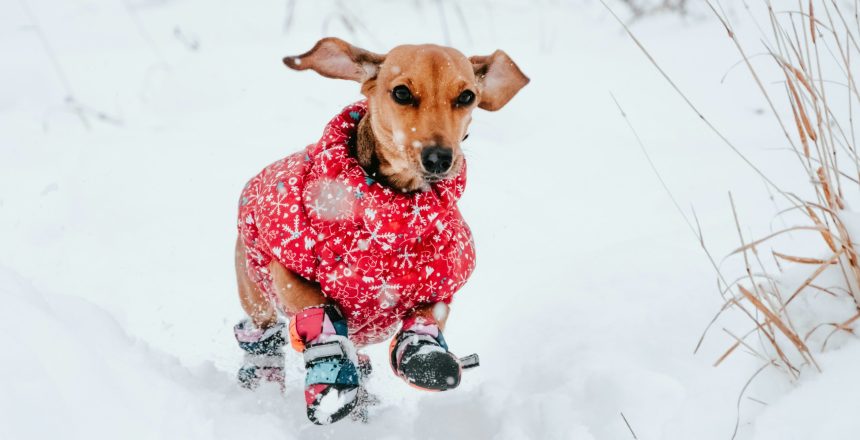
As the temperatures begin to drop and the daylight hours shorten, it is time to start thinking of winter safety for your dog. Whether a dog is heading outside for some play time or it is joining you on a winter hike, it is important to stay aware of the effects cold weather can have on a dog, and how to prevent undesirable and potentially lift-threatening situations.
Tips for Cold Weather Safety
Typically, puppies, short haired dogs, smaller dogs, and older dogs are more susceptible to the winter cold, but there are certainly safety measures that should be taken for all dogs. Here are some tips to follow as the temperatures continue to drop:
- Use Clothing: For the smaller and short haired dogs, some type of covering, such as a sweater or jacket, as well as boots, can be helpful for keeping a pet warm. Clothing and boots may also provide a secondary protection, preventing melting salts and sand from ending up on paws and fur.
- Check the Temperature: Before going outside, especially if it will be for a long period of time, make sure to check the weather and temperature. As a good rule of thumb to follow, if it is too cold for you outside, it is too cold for your dog. While some longer haired dogs may tolerate colder temperatures, they are all susceptible to weather that is too cold.
- Be Aware of Ice: Avoid walking on ice over water sources, such as ponds and lakes. It is hard to know how thick the ice is and how much can hold your dog’s weight. Falling through the ice can be fatal for a dog, as well as put an owner’s life at risk while trying to help.
- Wipe Down and Prevent Poisoning: During walks, a dog can easily pick up chemicals, such as de-icing products and anti-freeze, on their paws and fur. Make sure to wipe down or wash areas that a dog may lick to ensure they do not consume any chemicals. Keep dogs away from anti-freeze bottles and spills as well, and consider using pet-friendly de-icers.
- Know the Signs: A dog may not be tolerating the cold well if they are exhibiting signs of shivering, whining, lifting paws off the ground, or hesitation in walking. If your dog is showing these signs while outside, bring it inside to warm up. Frostbite can be hard to determine, especially during the first few days, so if you suspect a dog may have frostbite or hypothermia, contact a veterinarian immediately. Ears, paws, and tail tips are most susceptible to frostbite.
- Avoid Car Stays: While some may think it is safer to leave a pet in a car during the winter, this should be avoided. Similar to leaving a pet outside, temperatures can become very cold, making it unsafe for a dog.
- Use Reflective Gear: With the days becoming shorter, it is very possible there are times when a dog will be out and about in the dark. To keep both your dog and you safe, consider wearing reflective gear, and bringing a flashlight or lantern for oncoming traffic to see.
- Prevent Dry Skin: Going outside and then returning to a warm home repeatedly can cause dry skin on your dog. Some preventative measures that can be taken are towel drying the dog after going outside and using a humidifier in your home. Make sure to also bathe your pet as little as possible as this can lead to dry, flaky skin.
Following these tips and taking proactive steps to prepare for the upcoming season will help set your pup up for success and prevent any limitations on winter fun. Prepare wisely, pay close attention to your dog’s behavior, and enjoy a safe, happy, and active winter season together!
- Tags: Dog Care, Dog Tips, Winter Safety, Your Hearing Dog